
|
"Outstanding keeper instruction. This is a must for goalkeepers and coaches." —Ottawa Internationals S.C. web site, Ottawa, Canada |
|

|
Introduction
Techniques:
Footwork
Positioning
Catching
Diving
Advanced Diving
Punch/Parry
Breakaways
Distribution
Tactics
Advanced Tactics
Penalty Kicks
Psychology
Equipment
The Laws
Training Sessions
Links
Testimonials
About the Author
Coaching Forum
Discuss goalkeeping and more, at And-Again.com
Search

Coaching point |

Mistake to watch for |

Movie clip |
Chris Bowman, Brad Shannon: Videography and ball serving Matt Cross: Diving and breakaway demos Chris Sharpe: Goal kick demo
Bob Ellison: Video digitization and editing

|
RECOMMENDED:
A personally selected list of goalkeeping equipment, gifts, books, magazines,
and videos. Find the perfect gift for your favorite keeper or coach!
|

Upcoming Events: |



Start: Footwork
 |

The goalkeeper. They also call him doorman, keeper, goalie, bouncer or netminder, but he could just as well be called martyr, pay-all, penitent or punching bag. They say where he walks, the grass never grows.
-- Eduardo Galeano, Soccer in Sun and Shadow
The soccer goalkeeper is one of the most important players on the field - they are the last line of defense and the first line of attack. To play the position well requires special skills and training.
To many coaches, though, soccer goalkeeping techniques and tactics are a mystery. This is especially true at younger age levels, where often coaches have not played much soccer at all, much less played keeper. Even experienced field players and coaches may not have much experience with goalkeeping.
This site is designed to help soccer coaches coach their goalkeepers. It outlines and demonstrates basic soccer goalkeeping techniques and tactics, and also touches on the psychology of goalkeeping and provides a primer on goalkeeping equipment.
Techniques and tactics will be outlined, along with
pictures to clearly show the subject. For some techniques, a movie
is worth a thousand pictures, so look for the movie icon
() to indicate a video clip.
You will need
Quicktime to view
some of these. There will also
be coaching tips to help get the ideas across to players (look for
the  symbol), and pointers
to common mistakes to watch for (look for
). These coaching points and mistakes
will also be summarized at the bottom of each section.
symbol), and pointers
to common mistakes to watch for (look for
). These coaching points and mistakes
will also be summarized at the bottom of each section.
I hope this site will help soccer coaches be more effective in working with their goalkeepers and understanding the ins and outs of the position.

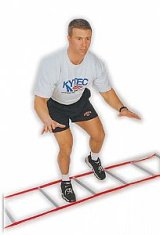
Soccer goalkeeping technique is focused on the mechanics of catching the ball, or at least deflecting it around the goal. Footwork is the key, because if a keeper's feet can't get them to where the ball is going, their hands will be useless. Catching is important, since sloppy catching technique can allow the ball to slip through the hands and into the net. Proper positioning allows the keeper to cover the largest portion of the goal possible, but occasionally a desperate diving attempt must be made to catch or deflect difficult shots. Finally, remember the goalkeeper is the last line of defense and the first line of attack - a keeper has to know the best way to get the ball to their teammates after the save has been made.
These techniques are presented roughly in the order they should be taught. You can certainly teach them in any order, but earlier topics like footwork are the basis for later topics and advanced techniques will be much more difficult for a keeper without sound fundamentals.
Goalkeeping is about safety - half is the safety of the goal; the other half is the safety of the goalkeeper. Proper goalkeeping technique is critical not only to keep the ball out of the net, but to keep the goalkeeper from getting injured. A good technical goalkeeper is safe in more ways than one, thus the importance of instilling good habits early. A poor technical keeper is a danger to their team and to themselves, so teach them well!

The soccer goalkeeper, more than anyone else on the soccer field, must be able to make split-second decisions that will affect the outcome of the game. This section will touch on some of the decisions a keeper will be faced with and the factors that should enter into their decision.

Goalkeepers are often nervous about penalty kicks, but the pressure is really on the shooter. Saving penalties is an art, not a science, but here are some pointers to be a better penalty kick keeper.

Because the margin of error is so thin, goalkeepers must have the mental constitution to handle the pressure and shake off mistakes. This section outlines some ways for a soccer coach to keep things positive for their goalkeepers and help them along even when things aren't going well.

The Laws of the Game of soccer state only that the goalkeeper must wear a color distinguishing them from their teammates. Most goalkeepers also wear gloves and other specialized clothes. This section discusses goalkeeper's gear, particularly what to look for in goalkeeping gloves and how to take care of them.

To play any game, you need to know the rules. This section comments on the Laws of the Game of soccer that relate to goalkeeping.

So, how do I go about teaching all this stuff to my goalkeepers? Here are sample training sessions I've used for coaching youth goalkeepers, covering all the topics presented on this site, plus a few additional miscellaneous training sessions.

To help your keeper fully develop sound techniques, you need practice that help reinforce them. Here are some good links I have found with drills, games, other soccer goalkeeping advice and general soccer coaching information.
| Start: Footwork
|
© 2007 Jeff Benjamin, all rights reserved
QuickTime and the QuickTime Logo are trademarks of Apple Computer, Inc., registered in the U.S. and other countries. The Get QuickTime Badge is a trademark of Apple Computer Inc., used with permission.